
• Inicial
  • Revista Embassy
  • Contato
sábado, 9 maio , 2026
22 °c
Brasília
26 ° sáb
27 ° dom
26 ° seg
25 ° ter
Embassy Agência de Notícias
EnglishFrenchItalianPortugueseSpanish
  • Eventos
  • Agenda
  • Entrevistas
  • Artigos
  • Comércio Exterior
  • Turismo
  • Mundo
  • Brasil
  • Enogastronomia
  • Cultura
  • Diplomacia
Nenhum resultado
Ver todos os resultados
  • Eventos
  • Agenda
  • Entrevistas
  • Artigos
  • Comércio Exterior
  • Turismo
  • Mundo
  • Brasil
  • Enogastronomia
  • Cultura
  • Diplomacia
Nenhum resultado
Ver todos os resultados
Embassy Agência de Notícias
EnglishFrenchItalianPortugueseSpanish
Home Mundo

[:pb]Industrialised nations must lead an exit strategy for fossil fuels[:]

por Liz Elaine
31 de março de 2016
em Mundo
Tempo de Leitura: 5 mins
A A
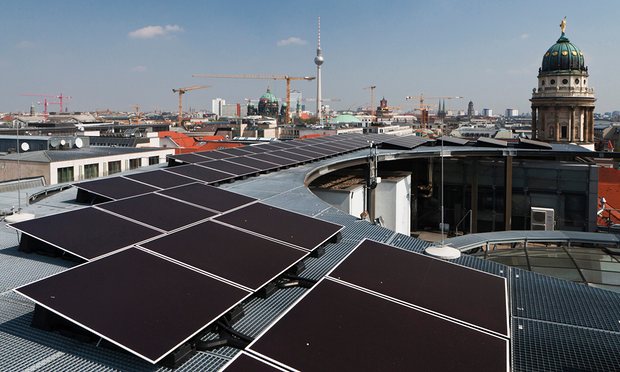
Solar panels on Berlin rooftops. ‘Germany must work hard to maintain our lead on energy transition.’ Photograph: Rolf Schulten/Bloomberg/Getty Images

Solar panels on Berlin rooftops. ‘Germany must work hard to maintain our lead on energy transition.’ Photograph: Rolf Schulten/Bloomberg/Getty Images

[:pb]

Energy efficiency and renewables are indispensable weapons in the fight against climate change, but the real challenge is keeping fossil fuel reserves in the ground

At the UN climate conference in Paris in December 2015, 195 countries concluded a groundbreaking climate accord. They agreed to limit global warming to well below 2C to avoid extremely dangerous and irreversible climate change.

The international community’s remaining emission “budget” is less than 1,000 gigatonnes of CO2. The Paris agreement is intended to ensure as quickly as possible that the annual global emissions go down, the budget is stretched, and the net emissions of greenhouse gases are reduced to zero over a few decades.

The challenge of limiting the combustion of oil, coal and gas to this budget is enormous in view of the fossil reserves still underground. If we were to use all the known and probable reserves to generate energy, global emissions would amount to around 15,000 gigatonnes of CO2. So limiting global warming to 2C means this: of the 15,000 thousand gigatonnes of CO2, we need to leave at least 14,000 underground.

Truly, our problem is not a scarcity of fossil resources, it is the exact opposite. We lack an exit strategy for oil, coal and gas. Energy efficiency and renewable energy are indispensable parts of a response to climate change, but they do not tell us why private companies and private individuals should stop extracting, marketing and consuming fossil fuels.

In fact, the progress made on energy efficiency and renewables can actually exacerbate the problem. An oversupply of fossil resources lowers the price and makes it even more tempting to use them. And the temptation is great: the fossil energy industry offers profits, jobs and low energy prices.

The Paris agreement says this to our children and grandchildren: “We promise not to expose you to the dangers of climate change.” If we are to keep our word, we have no alternative to decarbonisation. Our production and consumption must become carbon-neutral. There is an international consensus that the industrialised countries need to lead the way.

Germany does not need to change its climate and energy transition targets in view of the decisions made in Paris. There is a consensus amongst the political parties represented in the Bundestag that Germany will reduce greenhouse gases by 80-95% by 2050 from the 1990 baseline. The Federal government and the Bundestag have decided on the following interim goals: greenhouse gas emissions are to be down 40% by 2020, 55% by 2030, and 70% by 2040.

We should regard this challenge as an opportunity for a comprehensive modernisation of our economy. The fossil fuels are being substituted by investment in efficiency technologies and renewable energy. Here, a key role will be played by digitisation. In short: we will replace oil, coal and gas with intelligence and sustainable investment by 2050 at the latest. By doing this, we will be creating high-quality growth and jobs. If this transformation is to become a success story not only in climate terms, but also in economic terms, in the coming decades, we will need a paradigm shift.

The most important aspect is to avoid misallocated investments. We want to complete the switch by 2050, which gives us three-and-a-half decades. Investments in fossil structures with a lifespan extending beyond 2050 will become stranded assets of the respective companies, and will require us to undertake expensive repairs in future. A forward-looking approach to modernisation which avoids lock-in effects, subsequent destruction of capital, and job losses, must put the right policies in place right now.

We should therefore declare efficiency and renewable energy to be the new “rule”, the new standard investment. Investments in fossil structures must become the exception. We should only undertake them in cases where we have no alternative technologies or where the alternatives are disproportionately expensive. We need to reverse the rule-exception relationship: that is the paradigm shift.

What does the new “rule” – investment in energy efficiency and renewables – mean for the various sectors?

Power generation still accounts for by far the largest proportion of greenhouse gases. The sector is also set to grow as the decarbonisation of the heating and transport sectors will only be possible if we use more electricity. This electricity needs to stem from zero-carbon renewable sources, particularly wind and photovoltaics. We need to keep investing in these technologies.

Fossil fuel power stations have a lifespan of 40 years or more. To avoid misallocated investment which reach far beyond 2050 and to avoid lock-in effects, we should urgently dispense with new coal-fired power plants and extensions to opencast mines. Gas-fired power stations with comparatively small carbon emissions fall into the “exceptions” category, because we need them as controllable power stations for our energy security; however, natural gas will have to be replaced gradually by zero-carbon.

Of all CO2-relevant emissions, buildings have the longest lifespans, at around 100 years. We should therefore define an efficiency standard for all new buildings which, when coupled with the direct use of renewable energy and electricity, results in zero carbon emissions. We already have the necessary technologies and they are already affordable, so that this new standard can be introduced with just a few years’ notice.

The challenges in the existing building stock are far greater. These buildings are dominated by gas-fired and oil-fired combustion systems which mostly heat buildings which are only moderately insulated. In the short term, a switch to using efficient condensing boilers can save a lot of CO2 emissions. As heating systems have a lifespan of 20 years, from 2030 investment in fossil fuel heating systems should stop so that we can finish the transition by 2050. The only cost-efficient way to do this is to combine it with appropriate insulation of the building envelope.

The transport sector may pose the greatest challenge. Most of the rail system has already been electrified, but almost all passenger and freight traffic on the road, in the air and on water is almost entirely dependent on fossil fuels. Electric mobility offers us the chance to achieve the energy transition in the field of private transport. With an average lifespan of 20 years we need to have switched from fossil-based to renewables-based engines by 2030 if we are to stop using gasoline and diesel on our roads in 2050. The emissions of newly bought vehicles must then amount to zero. We need a road map which enables the state and the automotive industry to draw up an ambitious investment strategy for the transport sector.

The paradigm shift in the energy transition cannot be applied to all sectors. The process-related industrial emissions, and the methane emissions from agriculture, cannot be avoided by higher efficiency or a switch to renewable energy. These emissions will continue unless we manage to develop alternative technologies. But by far the largest proportion of our emissions is produced by burning oil, coal and gas.

For this reason, a cost-efficient energy transition should be oriented to investment cycles with a view to a far-reaching decarbonisation by the middle of the century. Investments in efficiency and renewable energy must become the rule, and investment in fossil structures the exception with clearly defined timelines for an exit.

By adopting this forward-looking policy, we will avoid misallocations of investment and lock-in effects. It will enable Germany to follow a sustainable path of growth– whereas a continuation of investment in fossil fuels brings incalculable economic risks. In the aftermath of Paris, we are now seeing a race between nations to adopt the smartest and most cost-efficient modernisation policies. Thanks to its energy transition, Germany has a lead. We will have to work hard if we are to maintain this lead.

Fonte: The Guardian

[:]

Notícia Anterior

[:pb]Festive lunch celebrates the National Day of Pakistan[:]

Próxima Notícia

[:pb]Bangladesh celebrates 45 years of Independence[:]

Notícias Relacionadas

Mundo

Teatro Bolshoi comemora 250 anos de fundação

28 de março de 2026
Mundo

Acordo Mercosul-UE entra em vigor provisoriamente em maio

24 de março de 2026
Mundo

Liga dos Estados Árabes celebra seu 81º Aniversário

21 de março de 2026
Próxima Notícia
Embaixador da República Popular de Bangladesh, Sr. Mohamed Mijarul Quayes

[:pb]Bangladesh celebrates 45 years of Independence[:]

Tags

Acordo Alemanha argentina Azerbaijão Brasil Brasília Cazaquistão China comércio Cooperação Coronavírus Covid-19 Diplomacia eleições Embaixada Embaixador Embaixadora EMBAIXADORES Estados Unidos EUA Exposição França India Irã Israel Itamaraty iTália Japão Joe Biden MERCOSUL ministro ONU palestina pandemia Portugal presidente reino unido russia São Paulo Turismo Ucrânia UE UNIÃO EUROPEIA Vacina Venezuela

CONTATOS • Contacts

+55 61 999873033

contato@embassynews.info

SIGA-NOS • Follow Us

Sobre a embassy • About Us

A Embassy é um moderno e dinâmico veículo de comunicação e business, cujo objetivo é divulgar as ações/projetos das embaixadas e organismos internacionais, de comércio exterior, intercâmbios bilaterais, missões diplomáticas, turismo, tecnologia, cultura e ambientais. São ainda nosso foco de divulgação, iniciativas dos governos federais, estaduais e municipais de âmbito mundial.
Embaixadores e Câmara Árabe discutem projetos - Embaixadores e Câmara Árabe discutem projetos -

Conselho dos Embaixadores Árabes e Câmara de Comércio Árabe Brasileira avaliam iniciativas para engajar a comunidade árabe no Brasil, além de realização de eventos.

A Câmara de Comércio Árabe Brasileira apresentou as atividades realizadas em 2025 pela instituição na quinta-feira (7), na Embaixada do Marrocos, em Brasília. Na ocasião, diplomatas de 16 países árabes e o chefe da missão da Liga Árabe no Brasil, Ibrahim Alzeben, discutiram sobre iniciativas e eventos para promover o diálogo e engajar a comunidade árabe no País.

De acordo com o vice-presidente de Relações Internacionais e secretário-geral da Câmara Árabe, Mohamad Orra Mourad, depois que o presidente da instituição, William Adib Dib Junior, apresentou o relatório de atividades de 2025, os diplomatas fizeram propostas à instituição.

🔗 Leia a matéria completa em embassynews.info
Embaixador da Belarus destaca papel histórico e co Embaixador da Belarus destaca papel histórico e contemporâneo das mulheres bielorrussas -

Em encontro com jornalistas, Andrey Andreyev lembrou da importante participação feminina no país em diferentes setores

Embaixador Andrey Andreyev 

O embaixador da Belarus, Andrey Andreyev, reuniu-se nesta sexta-feira com 12 jornalistas em um encontro promovido pela Embaixada da República da Belarus para apresentar reflexões sobre o papel das mulheres bielorrussas na história, na sociedade contemporânea e nas relações internacionais.

🔗 Leia a matéria completa em embassynews.info
Embaixador do Cazaquistão é recebido no Ministério Embaixador do Cazaquistão é recebido no Ministério da Agricultura -

Bolat Nussupov avalia visita de missão cazaque e a participação do Brasil em mesa-redonda em Astana na próxima segunda-feira (11).

O embaixador do Cazaquistão no Brasil, Bolat Nussupov, visitou o Ministério da Agricultura do Brasil, onde participou de uma reunião, dia 06, com o Secretário de Comércio e Relações Internacionais, Luís Renato de Alcântara Rua. No encontro, foi avaliada positivamente os resultados da visita da delegação de produtores rurais do Cazaquistão, liderada pelo Vice-Ministro da Agricultura Amangali Berdalin, durante a qual foram apresentadas 14 empresas do setor agroindustrial do Cazaquistão.

Foram discutidas ainda alguns aspectos do Memorando de Cooperação na área de pecuária entre o Ministério da Agricultura da República do Cazaquistão e o Ministério da Agricultura e Pecuária do Brasil.

🔗 Leia a matéria completa em embassynews.info
Brasil suspende exigência de visto para chineses a Brasil suspende exigência de visto para chineses até dezembro -

Medida entra em vigor na próxima segunda-feira (11) e vale para viagens de até 30 dias. Decisão foi tomada em reciprocidade à China, que suspendeu o visto para brasileiros em junho de 2025

O Brasil dispensará a exigência de visto para cidadãos chineses a partir do dia 11 de maio de 2026. O anúncio foi feito pelo presidente em exercício Geraldo Alckmin nesta quinta-feira (7), durante o Salão do Turismo, realizado em Fortaleza, no Ceará. Medida vale por viagens de até 30 dias, não prorrogáveis, e se aplica também a viagens de negócios, turismo, atividades artísticas ou esportivas e tem prazo até 31 de dezembro deste ano..

O governo brasileiro dá continuidade a iniciativas anteriores de facilitação de mobilidade, como a implementação do visto eletrônico para cidadãos chineses ao Brasil. A decisão segue o princípio da recipr...

🔗 Leia a matéria completa em embassynews.info 

#Alkimin #Brasil #China #decisão #exigência #suspensão #visto
Embaixador de Chipre se reúne com o senador Carlos Embaixador de Chipre se reúne com o senador Carlos Viana -

Vasilios Philippou apresentou as prioridades do seu país e sublinhou a importância da diplomacia parlamentar

O embaixador da República de Chipre no Brasil, Vasilios Philippou, reuniu-se hoje, 07 de maio, com o Senador Federal Carlos Alberto Dias Viana, Vice-Presidente do Grupo Parlamentar Brasil-Chipre. O encontro sublinhou a importância da diplomacia parlamentar como pilar essencial para o estreitamento das relações entre as duas nações. Durante a reunião, o embaixador apresentou as prioridades e os resultados alcançados pela Presidência de Chipre no Conselho da União Europeia. O senador Viana, por sua vez, enalteceu a atuação da embaixada e reafirmou o compromisso do Grupo Parlamentar em promover uma agenda de cooperação cada vez mais sólida e diversificada.
...

🔗 Leia a matéria completa em embassynews.info 

#CarlosAlbertoDiasViana #embaixdador #senador #VasiliosPhilippou
Tarcila do Amaral é tema de conversa no TCU - Pr Tarcila do Amaral é tema de conversa no TCU -

Protagonismo feminino será tópico de encontro do “Prêmio Engenho Mulher”

O Tribunal de Contas da União, em Brasília sediará, neste sábado, dia 9/5, o encontro do 4º Prêmio Engenho Mulher – Reconhecimento a Quem nos transforma”, vai reunir lideranças femininas para uma Roda de Conversa sobre protagonismo feminino. A conversa será às 10h, durante visita mediada à exposição inédita na capital brasileira "Transbordar o mundo: os olhares de Tarsila do Amaral". A mostra reúne mais de 60 obras originais, entre elas Operários, além de uma sala imersiva com projeções de pinturas icônicas da artista, como Abaporu.

Tem se tornado uma tradição do “Prêmio Engenho Mulher” reunir lideranças para debater sobre temas que impulsionam a equidade de gênero. “Tarsila nasceu ainda no século 19 e há mais de cem anos se projetou como uma...

🔗 Leia a matéria completa em embassynews.info 

#Engenho #Exposição #mostra #mulher #prêmio #Tarciladoamaral #TCU
Seguir no Instagram
  • Inicial
  • Revista Embassy
  • Contato

© 2026 Embassy - Agência de Notícias - Desenvolvido por:Iuppa Digital.

Nenhum resultado
Ver todos os resultados
  • Eventos
  • Agenda
  • Entrevistas
  • Artigos
  • Comércio Exterior
  • Turismo
  • Mundo
  • Brasil
  • Enogastronomia
  • Cultura
  • Diplomacia
EnglishFrenchItalianPortugueseSpanish

© 2026 Embassy - Agência de Notícias - Desenvolvido por:Iuppa Digital.

Welcome Back!

Login to your account below

Forgotten Password?

Retrieve your password

Please enter your username or email address to reset your password.

Log In