

• Inicial
  • Revista Embassy
  • Contato
sábado, 9 maio , 2026
22 °c
Brasília
26 ° sáb
27 ° dom
26 ° seg
25 ° ter
Embassy Agência de Notícias
EnglishFrenchItalianPortugueseSpanish
  • Eventos
  • Agenda
  • Entrevistas
  • Artigos
  • Comércio Exterior
  • Turismo
  • Mundo
  • Brasil
  • Enogastronomia
  • Cultura
  • Diplomacia
Nenhum resultado
Ver todos os resultados
  • Eventos
  • Agenda
  • Entrevistas
  • Artigos
  • Comércio Exterior
  • Turismo
  • Mundo
  • Brasil
  • Enogastronomia
  • Cultura
  • Diplomacia
Nenhum resultado
Ver todos os resultados
Embassy Agência de Notícias
EnglishFrenchItalianPortugueseSpanish
Home Mundo

[:pb]Switzerland is opening the world’s longest-ever railway tunnel[:]

por Liz Elaine
1 de junho de 2016
em Mundo
Tempo de Leitura: 4 mins
A A
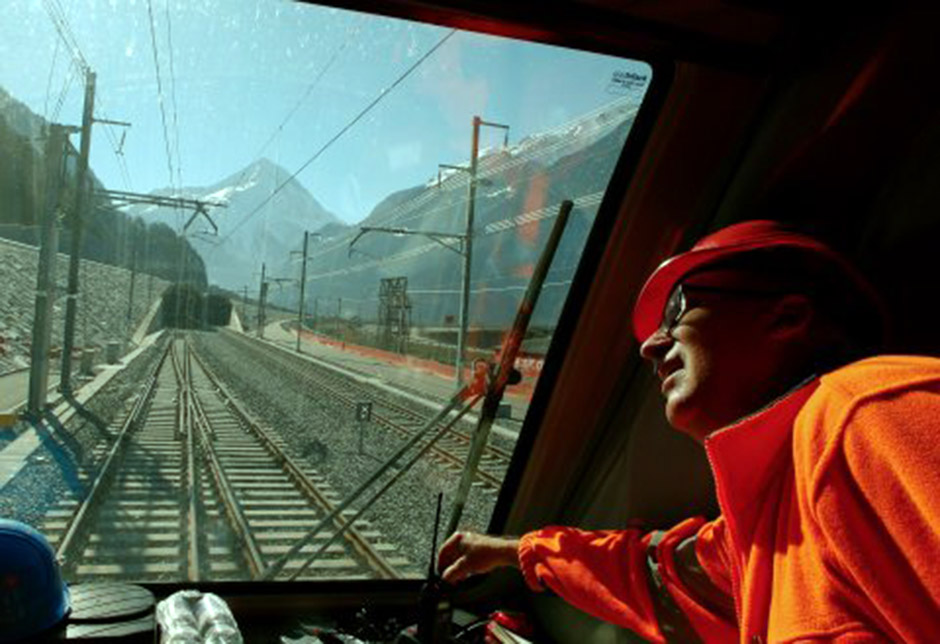
A railway worker looks out of the window of the drivers cabin of a test train in front of the nortern gate of the NEAT Gotthard Base Tunnel during a media visit, near the town of Erstfeld, Switzerland March 10, 2016.

A railway worker looks out of the window of the drivers cabin of a test train in front of the nortern gate of the NEAT Gotthard Base Tunnel during a media visit, near the town of Erstfeld, Switzerland March 10, 2016.

[:pb]They may look stunning, but for Europeans, the Alps can be a real pain in the neck. Reaching to just under 16,000 feet, the mountain range forms a thick wall across the continent’s West and center, dividing countries and making much European long-distance travel laborious and slow.

Nowadays, the mountains are of course breached by several major tunnels and highways, a network that has brought hitherto remote valleys within several hours’ journey of major cities. The Alps, nonetheless, still form a speed-slowing barrier between Southern and Northern Europe even today. Starting June 1st, however, that barrier should be considerably less impenetrable.

That’s because next month, Switzerland is opening the longest railway tunnel ever constructed. At a length of 35.5 miles, the new Gotthard Base Tunnelburrows deep beneath the mountains to connect Switzerland’s German- and Italian-speaking regions, ultimately linking the Swiss lowlands with the North Italian plain. It exceeds the length of its longest predecessor, Japan’s Seikan Tunnel, by a little over three kilometers (1.9 miles).

Running at up to 8,000 feet below mountain peaks at times, it also runs deeper below ground level than any other tunnel yet built. So great is the amount of rock and rubble created by the excavation—over 28 million tons—that steep artificial hills have been created in the valleys at the tunnel’s mouth.

While the tunnel’s opening is a triumph, the sheer length of its gestation time shows the degree of commitment—and money—that major infrastructure works require. The tunnel was first approved in 1992 in a national referendum, a product of Switzerland’s system of direct democracy, which sees national votes held on many issues. Work began in 1996, and the actual drilling of the tunnels was only completed in 2011. The total cost to date: roughly $10.3 billion.

Tunel

The benefits of this huge outlay, however, will be numerous. Now that trains will run on a specially constructed, almost entirely flat track, trains through the tunnel will be able to reach speeds of 150 miles per hour. This will slash the journey time between Zurich and Milan to just two hours and 30 minutes, considerably faster than the current four hours and 40 minutes. While that’s impressive, shorter hops between sub-Alpine cities aren’t really the new tunnels main raison d’etre, and wouldn’t alone necessarily be worth an injection of over $10 billion.

The tunnel’s real role is as part of something much grander, an installment of a massive railway development plan designed to streamline cargo transit across Europe. When complete, this faster network will slash journey times and haulage costs and lure cargo companies off of the continent’s highways and onto the rails. If all goes to plan, this will mean that highways are less congested and the air is markedly less polluted. With less traffic, the death toll on roads should also be reduced.

This matters a lot to the alpine regions, where the limited number of road crossings across the mountains creates bottlenecks that spike pollution and congestion in formerly peaceful, remote spots. But it’s not only in the tunnel’s immediate vicinity where the change should be felt.

The first of these streamlined rail corridors, running through the Gotthard Base Tunnel, will be a line that stretches all the way from Rotterdam in the Netherlands south to Genoa on the Mediterranean Coast. The termini are well-chosen—they essentially form the two furthest points of the mainland section of Europe’s Blue Banana, a heavily urbanized corridor housing more than 110 million inhabitants.

A test train is seen at a multifunction and emergency stop station of the NEAT Gotthard Base Tunnel during a media visit near the town of Sedrun, Switzerland March 10, 2016.

While Genoa is Italy’s busiest port by tonnage, Rotterdam remains the busiest port in Europe bar none. A speedier link to both these ports, where much container traffic from Asia offloads, will make European cargo transit faster, and thus more competitive. It may also have the effect of shifting some cargo destined for Switzerland and Southern Germany south to Genoa, Now that the port has a swifter onward rail connection.

The Gotthard Base Tunnel is still just the longest of the tunnels on several upcoming routes that will radically streamline trans-alpine transit. In Austria, two new tunnels, the Semmering Base Tunnel and the Koralm Tunnel, should be ready by 2024. These will slash journey times between the country’s two main cities, Vienna and Graz, but their main achievement will be to provide a far faster rail corridor ultimately reaching from the Baltic port of Gdansk to Bologna (and thus on to Rome). Meanwhile, in Austria, work has already begun on a major new tunnel under the Brenner Pass that, at 34 miles, will be almost as long as the Gotthard Base Tunnel. Running under the Alps due south of Innsbruck, this will provide a faster route between Italy and the German cities of Munich and Berlin—and possibly on to Scandinavia.

Meanwhile a new East-West alpine link has been given the green light, one that will link Lyon in France with Turin via high-speed rail (a project that has so far proved highly controversial). It should be in service by 2028, ultimately creating a fast rail corridor as far east as Budapest.

All these routes’ alpine sections are of course already served by existing tunnels, many of which were considered great feats in their era. Current infrastructure still often requires trains to undertake slow climbs, or to ring the sides of valleys in order to make a smoother ascent, and isn’t suitable for high-speed trains. This makes journeys along these lines scenically spectacular, but slow. The new tunnels might not be as appealing to tourists (except those in a hurry), but their speed should make the old era of alpine transit seem sclerotic and woefully inefficient.


So far, so good. But while the Gotthard tunnel may point toward a faster, cleaner future for European transit, it’s not quite on the way to realizing its potential just yet. Italy’s rail network still needs major work, and as the worst conditions are in the country’s south, Rome’s current priority may be to work there first. Collaboration between the EU and non-member Switzerland may have unlocked huge amounts of funding and goodwill for continent-shaping projects like the tunnel, but engineers still need to grapple with a clutch of different states, many of whom are facing economic uncertainty. Still, while European rail’s cleaner, faster future may not arrive the day the Gotthard Base Tunnel’s ribbon is cut, at least it’s on its way.

MORE FROM CITYLAB:

Americans Once Blamed Suburbs for Their Illnesses: Best #Cityreads of the Week

Turning Detroit’s Invasive Plants Into Community-Building Art

Finding Humanity in a Burning South Bronx

Nuclear Power Fights for a Spot in Illinois’ Clean Energy Future

Can California Show the U.S. How To Do Elections Right?

Fonte: http://www.businessinsider.com/[:]

Notícia Anterior

[:pb]June: it is open the season of Arraiá in Brazil[:]

Próxima Notícia

[:pb]Noite Dominicana[:]

Notícias Relacionadas

Mundo

Teatro Bolshoi comemora 250 anos de fundação

28 de março de 2026
Mundo

Acordo Mercosul-UE entra em vigor provisoriamente em maio

24 de março de 2026
Mundo

Liga dos Estados Árabes celebra seu 81º Aniversário

21 de março de 2026
Próxima Notícia

[:pb]Noite Dominicana[:]

Tags

Acordo Alemanha argentina Azerbaijão Brasil Brasília Cazaquistão China comércio Cooperação Coronavírus Covid-19 Diplomacia eleições Embaixada Embaixador Embaixadora EMBAIXADORES Estados Unidos EUA Exposição França India Irã Israel Itamaraty iTália Japão Joe Biden MERCOSUL ministro ONU palestina pandemia Portugal presidente reino unido russia São Paulo Turismo Ucrânia UE UNIÃO EUROPEIA Vacina Venezuela

CONTATOS • Contacts

+55 61 999873033

contato@embassynews.info

SIGA-NOS • Follow Us

Sobre a embassy • About Us

A Embassy é um moderno e dinâmico veículo de comunicação e business, cujo objetivo é divulgar as ações/projetos das embaixadas e organismos internacionais, de comércio exterior, intercâmbios bilaterais, missões diplomáticas, turismo, tecnologia, cultura e ambientais. São ainda nosso foco de divulgação, iniciativas dos governos federais, estaduais e municipais de âmbito mundial.
Embaixadores e Câmara Árabe discutem projetos - Embaixadores e Câmara Árabe discutem projetos -

Conselho dos Embaixadores Árabes e Câmara de Comércio Árabe Brasileira avaliam iniciativas para engajar a comunidade árabe no Brasil, além de realização de eventos.

A Câmara de Comércio Árabe Brasileira apresentou as atividades realizadas em 2025 pela instituição na quinta-feira (7), na Embaixada do Marrocos, em Brasília. Na ocasião, diplomatas de 16 países árabes e o chefe da missão da Liga Árabe no Brasil, Ibrahim Alzeben, discutiram sobre iniciativas e eventos para promover o diálogo e engajar a comunidade árabe no País.

De acordo com o vice-presidente de Relações Internacionais e secretário-geral da Câmara Árabe, Mohamad Orra Mourad, depois que o presidente da instituição, William Adib Dib Junior, apresentou o relatório de atividades de 2025, os diplomatas fizeram propostas à instituição.

🔗 Leia a matéria completa em embassynews.info
Embaixador da Belarus destaca papel histórico e co Embaixador da Belarus destaca papel histórico e contemporâneo das mulheres bielorrussas -

Em encontro com jornalistas, Andrey Andreyev lembrou da importante participação feminina no país em diferentes setores

Embaixador Andrey Andreyev 

O embaixador da Belarus, Andrey Andreyev, reuniu-se nesta sexta-feira com 12 jornalistas em um encontro promovido pela Embaixada da República da Belarus para apresentar reflexões sobre o papel das mulheres bielorrussas na história, na sociedade contemporânea e nas relações internacionais.

🔗 Leia a matéria completa em embassynews.info
Embaixador do Cazaquistão é recebido no Ministério Embaixador do Cazaquistão é recebido no Ministério da Agricultura -

Bolat Nussupov avalia visita de missão cazaque e a participação do Brasil em mesa-redonda em Astana na próxima segunda-feira (11).

O embaixador do Cazaquistão no Brasil, Bolat Nussupov, visitou o Ministério da Agricultura do Brasil, onde participou de uma reunião, dia 06, com o Secretário de Comércio e Relações Internacionais, Luís Renato de Alcântara Rua. No encontro, foi avaliada positivamente os resultados da visita da delegação de produtores rurais do Cazaquistão, liderada pelo Vice-Ministro da Agricultura Amangali Berdalin, durante a qual foram apresentadas 14 empresas do setor agroindustrial do Cazaquistão.

Foram discutidas ainda alguns aspectos do Memorando de Cooperação na área de pecuária entre o Ministério da Agricultura da República do Cazaquistão e o Ministério da Agricultura e Pecuária do Brasil.

🔗 Leia a matéria completa em embassynews.info
Brasil suspende exigência de visto para chineses a Brasil suspende exigência de visto para chineses até dezembro -

Medida entra em vigor na próxima segunda-feira (11) e vale para viagens de até 30 dias. Decisão foi tomada em reciprocidade à China, que suspendeu o visto para brasileiros em junho de 2025

O Brasil dispensará a exigência de visto para cidadãos chineses a partir do dia 11 de maio de 2026. O anúncio foi feito pelo presidente em exercício Geraldo Alckmin nesta quinta-feira (7), durante o Salão do Turismo, realizado em Fortaleza, no Ceará. Medida vale por viagens de até 30 dias, não prorrogáveis, e se aplica também a viagens de negócios, turismo, atividades artísticas ou esportivas e tem prazo até 31 de dezembro deste ano..

O governo brasileiro dá continuidade a iniciativas anteriores de facilitação de mobilidade, como a implementação do visto eletrônico para cidadãos chineses ao Brasil. A decisão segue o princípio da recipr...

🔗 Leia a matéria completa em embassynews.info 

#Alkimin #Brasil #China #decisão #exigência #suspensão #visto
Embaixador de Chipre se reúne com o senador Carlos Embaixador de Chipre se reúne com o senador Carlos Viana -

Vasilios Philippou apresentou as prioridades do seu país e sublinhou a importância da diplomacia parlamentar

O embaixador da República de Chipre no Brasil, Vasilios Philippou, reuniu-se hoje, 07 de maio, com o Senador Federal Carlos Alberto Dias Viana, Vice-Presidente do Grupo Parlamentar Brasil-Chipre. O encontro sublinhou a importância da diplomacia parlamentar como pilar essencial para o estreitamento das relações entre as duas nações. Durante a reunião, o embaixador apresentou as prioridades e os resultados alcançados pela Presidência de Chipre no Conselho da União Europeia. O senador Viana, por sua vez, enalteceu a atuação da embaixada e reafirmou o compromisso do Grupo Parlamentar em promover uma agenda de cooperação cada vez mais sólida e diversificada.
...

🔗 Leia a matéria completa em embassynews.info 

#CarlosAlbertoDiasViana #embaixdador #senador #VasiliosPhilippou
Tarcila do Amaral é tema de conversa no TCU - Pr Tarcila do Amaral é tema de conversa no TCU -

Protagonismo feminino será tópico de encontro do “Prêmio Engenho Mulher”

O Tribunal de Contas da União, em Brasília sediará, neste sábado, dia 9/5, o encontro do 4º Prêmio Engenho Mulher – Reconhecimento a Quem nos transforma”, vai reunir lideranças femininas para uma Roda de Conversa sobre protagonismo feminino. A conversa será às 10h, durante visita mediada à exposição inédita na capital brasileira "Transbordar o mundo: os olhares de Tarsila do Amaral". A mostra reúne mais de 60 obras originais, entre elas Operários, além de uma sala imersiva com projeções de pinturas icônicas da artista, como Abaporu.

Tem se tornado uma tradição do “Prêmio Engenho Mulher” reunir lideranças para debater sobre temas que impulsionam a equidade de gênero. “Tarsila nasceu ainda no século 19 e há mais de cem anos se projetou como uma...

🔗 Leia a matéria completa em embassynews.info 

#Engenho #Exposição #mostra #mulher #prêmio #Tarciladoamaral #TCU
Seguir no Instagram
  • Inicial
  • Revista Embassy
  • Contato

© 2026 Embassy - Agência de Notícias - Desenvolvido por:Iuppa Digital.

Nenhum resultado
Ver todos os resultados
  • Eventos
  • Agenda
  • Entrevistas
  • Artigos
  • Comércio Exterior
  • Turismo
  • Mundo
  • Brasil
  • Enogastronomia
  • Cultura
  • Diplomacia
EnglishFrenchItalianPortugueseSpanish

© 2026 Embassy - Agência de Notícias - Desenvolvido por:Iuppa Digital.

Welcome Back!

Login to your account below

Forgotten Password?

Retrieve your password

Please enter your username or email address to reset your password.

Log In