
• Inicial
  • Revista Embassy
  • Contato
terça-feira, 21 abril , 2026
22 °c
Brasília
26 ° sáb
27 ° dom
26 ° seg
25 ° ter
Embassy Agência de Notícias
EnglishFrenchItalianPortugueseSpanish
  • Eventos
  • Agenda
  • Entrevistas
  • Artigos
  • Comércio Exterior
  • Turismo
  • Mundo
  • Brasil
  • Enogastronomia
  • Cultura
  • Diplomacia
Nenhum resultado
Ver todos os resultados
  • Eventos
  • Agenda
  • Entrevistas
  • Artigos
  • Comércio Exterior
  • Turismo
  • Mundo
  • Brasil
  • Enogastronomia
  • Cultura
  • Diplomacia
Nenhum resultado
Ver todos os resultados
Embassy Agência de Notícias
EnglishFrenchItalianPortugueseSpanish
Home Mundo

Arctic in danger

por Liz Elaine
6 de novembro de 2016
em Mundo
Tempo de Leitura: 4 mins
A A

Your carbon footprint destroys 30 square metres of Arctic sea ice a year

New research calculates the impact of the average westerner’s carbon emissions to help people understand their own contribution to climate change

terra
A satellite-based view of the Arctic. Scientists say it will be ice-free in summer in about 20 years under current climate action. Photograph: VIIRS/Suomi NPP/NASA

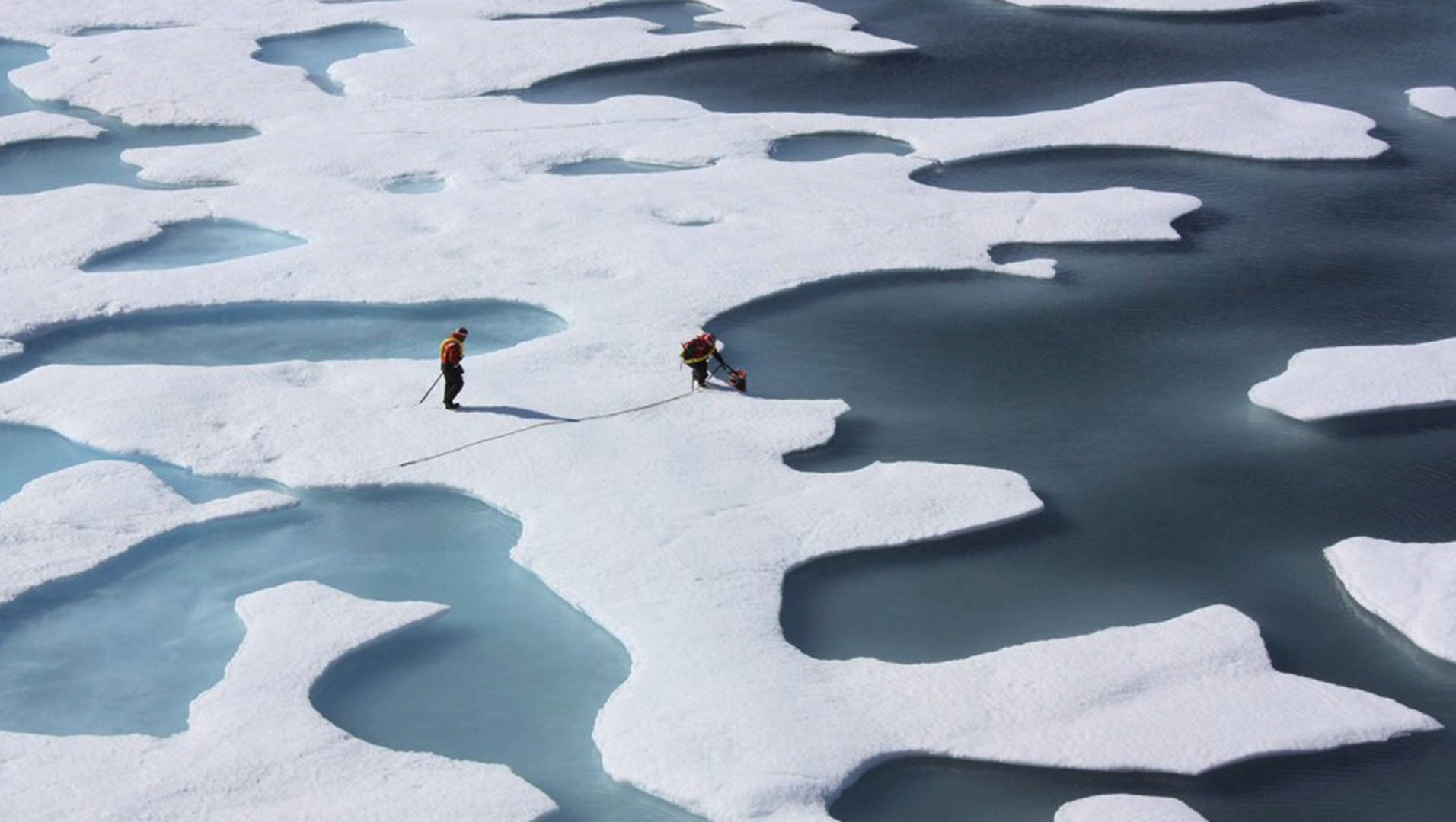
The average westerner’s carbon emissions destroy 30 square metres of Arctic sea ice every year, according to new research.  The work indicates that, even with current efforts to cut emissions, the Arctic will lose all its ice in summer within about 20 years.

Plummeting Arctic sea ice cover is one of the most obvious signs of climate change and is increasingly linked to extreme weather events such as storms and floods in Europe and severe cold snaps in the US.

The new study revealed a linear link between emissions of CO2 and the loss of Arctic sea ice, which has shrunk by half in the last 40 years. The link enables people to understand their own contribution to climate change, according to the leader of the work, Prof Dirk Notz, at the Max-Planck-Institute for Meteorology in Hamburg, Germany.

“It allows us, for the first time really, to intuitively grasp how we all individually contribute to global warming,” he said. “The observed numbers are very simple. For each tonne of CO2 that a person emits anywhere on this planet, three square metres of Arctic summer sea ice disappears.”

“So far the global warming debate has always been about very large numbers like billions of tonnes of CO2 or very small numbers like 0.1C of temperature change,” he said. “Our study allows us to understand that it is really our own individual actions, every day, that contribute to ongoing global warming.”

The research, published in the journal Science, analysed the declining extent of Arctic sea ice from 1953 to 2015 and found it tracked the emissions of CO2 from fossil fuel burning and other human activities. The relationship fits well with the underlying physics.

As a result, it is possible to calculate how much Arctic sea ice is lost as a result of an individual’s emissions. The average annual emissions of a citizen of the 35 rich nations in the Organisation for Economic Co-operation and Development (OECD) is 10 tonnes per year, leading to 30 sq m of ice being lost. Citizens of the US, Canada and Australia have a higher carbon footprint – about 16 tonnes – each causing almost 50 sq m of ice loss per year. In the UK, the average emissions are 7.5 tonnes per year, meaning 22.5 sq m of ice loss.

Prof Len Shaffrey, at the University of Reading in the UK, said the new research was sound and showed a new way of linking Arctic sea ice loss and personal CO2 emissions: “It means on average we are [each] responsible for the loss of tens of square metres of summer Arctic sea ice. That’s a pretty sobering thought.”

The link also allows the calculation of how much CO2 can be emitted in future before the Arctic is entirely ice-free in September, usually the month of the smallest extent. The scientists found 1,000 gigatonnes (GT) of CO2 was the limit. If all the carbon-cutting pledges currently made by the world’s nations are implemented, the Arctic will be ice free in summer in about 22 years, according to the new research.

“There is not a god-given year when the ice will be gone but there is this number of 1,000GT – once we have emitted that amount, the [summer] Arctic sea ice will be gone,” Notz said. “If emissions don’t change at all from today’s level, which is extremely unlikely, then the ice will be gone in 25 years. If emissions continue to rise then the ice will be gone sooner than that.”

The 1,000GT carbon budget is also the limit for keeping climate change below the internationally agreed threshold of 2C. This means that even if the Paris climate treaty, which enters into force on Friday, is successful, the Arctic will still become ice-free in summer.

However, the Paris treaty also includes an aspiration to limit the temperature rise to 1.5C, which would require radical cuts in CO2 emissions, including sucking the gas out of the air and burying it. If this was achieved, the Arctic ice cap would remain year round.

Arctic sea ice fell to its second lowest recorded extent in September, and scientists say this matters for a number of reasons. “By losing Arctic sea ice, we are losing a very effective refrigerator, as sea ice today reflects most of the sunlight and keeps the Arctic cool,’ said Notz. “If we lose this refrigerator, the Greenland ice cap will melt much more rapidly, for example, and drive up sea levels.”

Other scientists are increasingly linking the loss of Arctic sea ice to a weakening of a high level wind, called the jet stream, which is in turn linked to increasing extreme weather events, such as storms and floods in western Europe, severe cold snaps in the US and drought in California. “The jury is still out on how robust these studies are but there is mounting evidence,” said Notz.

“Also, we are destroying a landscape from this planet which is extremely beautiful and future generations would have nothing to look at but open water in September, so for me that is an ethical thing,” he said.


Notícia Anterior

Italianos celebram Dia da Unidade Nacional e das Forças Armadas

Próxima Notícia

Horta compartilhada

Notícias Relacionadas

Mundo

Teatro Bolshoi comemora 250 anos de fundação

28 de março de 2026
Mundo

Acordo Mercosul-UE entra em vigor provisoriamente em maio

24 de março de 2026
Mundo

Liga dos Estados Árabes celebra seu 81º Aniversário

21 de março de 2026
Próxima Notícia

Horta compartilhada

Tags

Acordo Alemanha argentina Azerbaijão Brasil Brasília Cazaquistão China comércio Cooperação Coronavírus Covid-19 Diplomacia eleições Embaixada Embaixador Embaixadora EMBAIXADORES Estados Unidos EUA Exposição França India Irã Israel Itamaraty iTália Japão Joe Biden MERCOSUL ministro ONU palestina pandemia Portugal presidente reino unido russia São Paulo Turismo Ucrânia UE UNIÃO EUROPEIA Vacina Venezuela

CONTATOS • Contacts

+55 61 999873033

contato@embassynews.info

SIGA-NOS • Follow Us

Sobre a embassy • About Us

A Embassy é um moderno e dinâmico veículo de comunicação e business, cujo objetivo é divulgar as ações/projetos das embaixadas e organismos internacionais, de comércio exterior, intercâmbios bilaterais, missões diplomáticas, turismo, tecnologia, cultura e ambientais. São ainda nosso foco de divulgação, iniciativas dos governos federais, estaduais e municipais de âmbito mundial.
A EMBASSY tem a satisfação de anunciar a formaliza A EMBASSY tem a satisfação de anunciar a formalização de uma nova e relevante parceria institucional com a Embaixada da Geórgia, que resultará na produção de uma edição especial inteiramente dedicada ao país.

O projeto já está em andamento e mobiliza uma equipe multidisciplinar de excelência, composta por jornalistas, revisora, fotógrafa, designer gráfico e tradutores, com o compromisso de apresentar um conteúdo editorial de alto padrão, à altura da proposta e da relevância internacional da publicação.

Com lançamento previsto para o mês de maio, a 11ª edição da EMBASSY reafirma o compromisso de uma revista com qualidade, credibilidade e a valorização das relações internacionais.

Em breve, mais informações.
Acompanhe.
Post do Instagram 17993623085937448 Post do Instagram 17993623085937448
✨🎧 Justiça também se traduz. Entre vozes, idiomas ✨🎧 Justiça também se traduz.

Entre vozes, idiomas e silêncios históricos, a exposição “1 Julgamento, 4 Línguas – Os pioneiros da interpretação simultânea em Nuremberg” revela quem tornou possível um dos momentos mais decisivos da humanidade — o Tribunal de Nuremberg.

Eles não estavam nos holofotes.
Mas sem eles, nada teria sido compreendido.
Nada teria sido julgado.

Quatro idiomas.
Uma verdade em construção.
E profissionais que sustentaram o peso da história… em tempo real.

A realização desta mostra reúne nomes que seguem sustentando o diálogo global hoje:
🤝 Associação Internacional de Intérpretes de Conferência (AIIC)
🤝 Associação Profissional de Intérpretes de Conferência (APIC)
🇩🇪 Embaixada da Alemanha no Brasil, representada pelo Encarregado de Negócios a.i., Sr. Wolfgang Bindseil

📍 Biblioteca Nacional de Brasília
🗓️ Até 10 de abril
🎟️ Entrada gratuita

Se você nunca parou para pensar no poder de uma tradução… talvez essa seja a sua chance.

💬 Você já tinha imaginado o impacto desses intérpretes na história?

#brasíliacultural
#nuremberg
#revistaembassy
#interpretaçãosimultânea
#comunicaçãoglobal
Post do Instagram 17853929589631895 Post do Instagram 17853929589631895
Post do Instagram 18523781110069486 Post do Instagram 18523781110069486
A milonga uruguaia animou a festa nacional do Urug A milonga uruguaia animou a festa nacional do Uruguai em Brasília. A reportagem você vai poder ler na Embassy
Seguir no Instagram
  • Inicial
  • Revista Embassy
  • Contato

© 2026 Embassy - Agência de Notícias - Desenvolvido por:Iuppa Digital.

Nenhum resultado
Ver todos os resultados
  • Eventos
  • Agenda
  • Entrevistas
  • Artigos
  • Comércio Exterior
  • Turismo
  • Mundo
  • Brasil
  • Enogastronomia
  • Cultura
  • Diplomacia
EnglishFrenchItalianPortugueseSpanish

© 2026 Embassy - Agência de Notícias - Desenvolvido por:Iuppa Digital.

Welcome Back!

Login to your account below

Forgotten Password?

Retrieve your password

Please enter your username or email address to reset your password.

Log In